Tuesday, July 10, 2012

Cottonwood Creek Trail / Crestone Open for the Summer


The Cottonwood Creek Trail south of the town of Crestone, and the historic west side pathway to the Crestones & other peaks, is open for the summer. Prospective climbers are asked to contact the manager of the Baca Grande Water & Sanitation District, Steve Harrell in advance of arrival. Since the available parking is on Water/San property, they need to know who is climbing in case there is a need for search/rescue service. He can also update climbers in case something changes later in the summer.


Camping is not allowed at the trailhead. There is a portable toilet in place, courtesy of the Cottonwood Study Group (CMC is a part of the Group). There also is an informational kiosk at the trailhead erected by the Forest Service. There may be a survey box near the kiosk, and climbers are asked to complete one. The surveys will assist in further deliberations about trail access after 2012. Please practice Leave No Trace principles along the trail and up to the peaks as Cottonwood Creek is a key source for local drinking water.


Tuesday, July 3, 2012

Colorado Roadless Rule Published

Today the USDA published the Colorado Roadless Rule in the Federal Register, meaning it is now in effect for Colorado's National Forests. 

CMC has released a statement, which reads, in part: “The Colorado Roadless Rule has some strong conservation components we like a lot, and a few exceptions for industry we are not thrilled about,” said Scott Braden, Conservation Director.  “But on balance, this rule protects millions of acres for wildlife habitat, sustains our large recreation economy and our Colorado quality of life.”

 Quick facts:
  • Colorado Roadless Rule (CRR) manages 4.2 million acres of national forest land in CO
  • The CRR manages 1.2 million acres in an "upper tier" with higher protections
  • The CRR includes some exceptions to the rule to allow for certain state-specific concerns: managing for the bark beetle epidemic, ski area expansion, access to water infrastructure and coal mine expansion in the North Fork Valley
Links:

USFS CO Roadless Rule page (with maps and supporting documents)

Tuesday, June 26, 2012

What does a 'Service Project' entail? Check out Uncle Bud's Hut Service Project....

Ever wonder what goes on with a CMC 'Service Project'? Here's a brief synopsis from our recent Uncle Bud's Hut Service Project. If you're looking for a fun way to give back to the trails you enjoy, visit www.cmc.org/stewardship and sign up for a project today!

June 22 thru 24 six members of the CMC teamed up with the 10th Mountain Division Hut staff and completed maintenance projects, painting, staining, cleaning and wood stacking~ lots of wood stacking ~ at Uncle Bud’s Hut near Leadville. We had great dinners (thanks CMC Stewardship) and beautiful evening hikes (thanks Mother Nature). If you are ever lucky enough to participate in a 10th Mtn Hut project you will work hard with a organization that has their objectives for the Hut totally dialed in… they have done this a few times! And they, like our member volunteers, love the mountains and the opportunity to be part of what makes Colorado such a great place to live, play… and work.

Jan M.


Thursday, June 21, 2012

CONSERVATION BRIEFS


Great Outdoors Colorado (GOCO) funds new river-enhancing projects, including a trail up Clear Creek Canyon from Golden.  Lottery dollars in Colorado are spent to enhance outdoor recreation opportunities and protect open space.  Often there are attempts to divert this lottery revenue to other areas of need. 

CMC works to protect GOCO and the lottery funding so it continues to enhance our outdoor environment, so important to our health, environment and economy 

What do you think?

"Colorado leaders launched eight new greenspace projects aimed at drawing more people to rivers and creeks, awarding nearly $30 million in state lottery grants. Five are in Front Range urban areas. Three are in urbanizing mountain areas. All rely on the lure of water for play, walking, kayaking, biking and fishing."

Read more at the Denver Post: http://bit.ly/MwkpTV


Tuesday, June 12, 2012

Guest Blog #2 Dr. Sean Haney on Nature Deficiency Syndrome

Guest Blog #2 Dr. Sean Haney, Kaiser Permanente


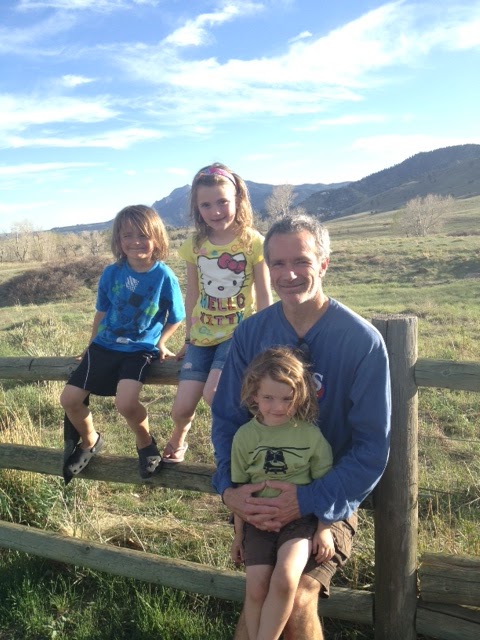
Richard Louv popularized the concept of the “nature deficiency syndrome” in his 2006 book, Last Child in the Woods.  His concept is essentially that children are no longer experiencing nature as they once had. This in turn has contributed to the increase in childhood obesity and attention deficit disorder.  The concept is interesting and thought provoking.

I am no expert on this specific research field but knowing a fair amount about how research is done, I suspect that this might be difficult to prove.  From anecdotal evidence (that is a fancy way of saying “in my experience”), children do not seem to experience nature as they once did.  By “nature” I don’t mean Yosemite or Rocky Mountain National Park.  Families took vacations to these wonderful parks and still do.   The nature which kids are not exploring as they once did is actually the nearby open field, creek or hillside.  I remember growing up in an area where the hills had not yet been built upon.  We used the trails, peaks, gulches as our exploration ground, physically and imaginatively.  We rode our bikes, fought dragons, rescued maidens and killed monsters.

The reason for the loss of this connection to nature maybe loss of environment, safety concerns for the children and alternative choices regarding use of free time.
So, instead of being outside exploring and experience the outdoors or parks, our children are spending a lot more time in front of electronic screens and in organized play dates and not free exploration of hillsides and open fields.

The effect of the nature deficit disorder per Lovu is an increase in attention deficit disorder (ADD), mood disorders and obesity.  ADD and mood disorders may be more prevalent because we have more sensitive screening tools now and not necessarily for other reasons.  An increase in childhood obesity is well documented. Causation is difficult to prove.

Will reconnecting with nature diminish the effects of the purported nature deficiency syndrome?  I don’t know.  I believe that reconnecting our children to nature is important for many reasons.   They may enjoy the experience tremendously and it may get them out from the screens that take so much of their time.  One day they will grow up and vote (hopefully) and if they think back fondly on their experiences outdoors in out parks or open fields, hill sides and creeks, they may wish to protect these spaces for their own children.  If getting kids outside helps prevent nature deficiency syndrome and all that accompanies it, then great.  Regardless, kids should be discovering trails and bugs while slaying dragons and rescuing fair damsels from evil knights.